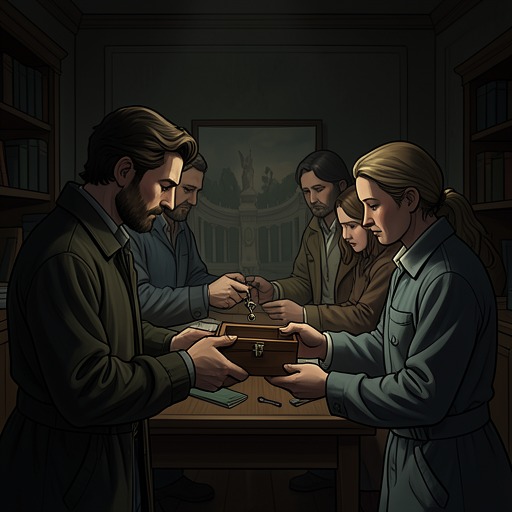
Doing nothing is as good as collaborating
All the Light We Cannot SeeThe expression “Doing nothing is as good as collaborating” makes passivity morally legible as a choice. Spoken in an exchange about unequal privilege and the need to help, it rejects the comfort of treating inaction as neutrality and helps move the conversation toward resistance.
The Exchange
The remark follows a pointed discussion of Claude Levitte and the advantages his family receives: more meat, electricity, and butter than others. One speaker says they know how such prizes are won; another asks for help. In response, a hesitant participant says, “I don’t want to make trouble, Madame.” The exchange thus places the expression against a specific reluctance: the fear that taking action will bring trouble.
From Inaction to Complicity
The argument develops through a brief sequence of challenge and reply. Asked, “Isn’t doing nothing a kind of troublemaking?”, the hesitant speaker answers, “Doing nothing is doing nothing.” The subsequent formulation, “Doing nothing is as good as collaborating,” overturns that distinction. It does not claim that inaction and active collaboration are identical acts; it insists that, under these conditions, refusing to act can carry a comparable moral weight.
A Turn Toward Action
The expression functions as pressure rather than abstract instruction. It answers the appeal to avoid trouble by making the consequences of passivity part of the choice. The conversation ends with Madame Manec saying, “I know ways.” That response gives the argument practical direction: the exchange moves from naming complicity to the possibility of doing something, without yet specifying the methods.